Shot Sizes, Angles and Lenses: A Visual Guide
Size, angle and lens are three separate choices. Together they decide what the audience sees and how close they feel to a person.
Shot sizes
Size is how much of the person fills the frame.
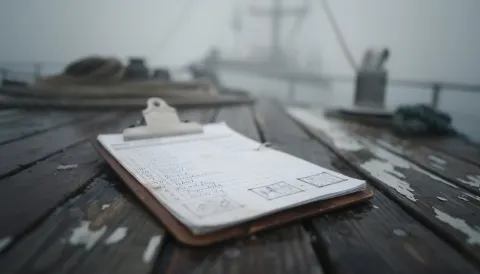
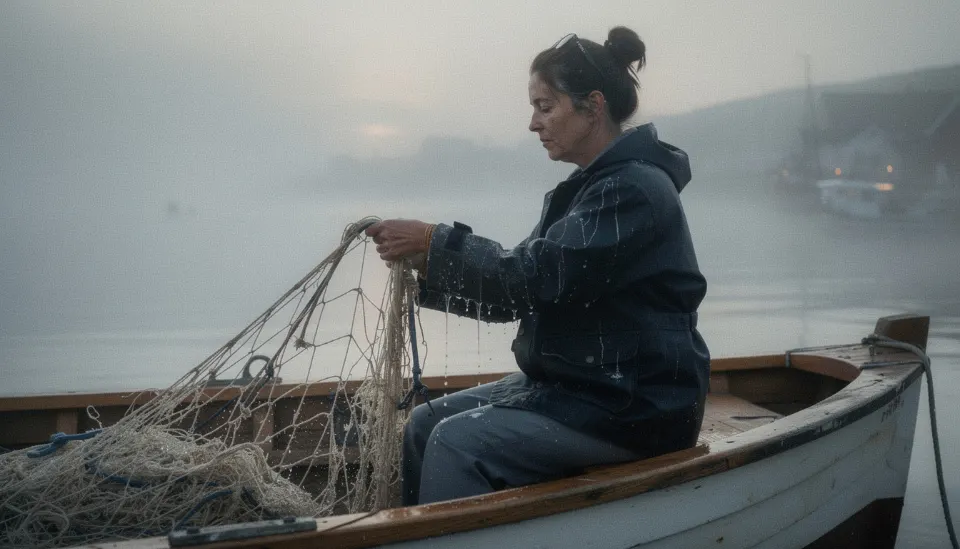
- Extreme wide: the place is the subject. The HARBOUR in fog with NORA as a small shape.
- Wide: the whole body and the space around it.
- Medium: from the waist up. Good for talk and action together.
- Close-up: the face. We read thought and feeling.
- Extreme close-up: one detail. OLD TOM's hand on the lamp switch.
Camera angles
Angle is the height of the camera and where it points.
- Eye level: neutral. We stand with the person.
- Low angle: looking up. The person seems bigger or stronger.
- High angle: looking down. The person seems smaller or alone.
- Overhead: straight down. A map view, often cold.
- Dutch tilt: the frame leans. Something feels wrong.
Wide lenses: 18mm to 24mm
These see a lot of the space. Distances look longer and faces near the lens stretch.
Use them for places and for a feeling of space or unease. The LIGHTHOUSE stairs at 18mm look tall and tight.
Normal lenses: 35mm to 50mm
These feel close to how we see. 35mm keeps some room around a person. 50mm feels natural and calm.
Good for NORA'S KITCHEN, where we want to feel like a guest at the table.
Portrait lenses: 85mm
85mm flattens a face in a kind way and softens the background. It is a common choice for close-ups.
Use it for THE BOY's face when he lies about where he was.
Long lenses: 100mm to 135mm
These pull distant things close and squeeze space together. The background looks big and near.
From far down the wall, 135mm on NORA makes the fog bank loom behind her. It can also feel like watching from hiding.
Combine them on purpose
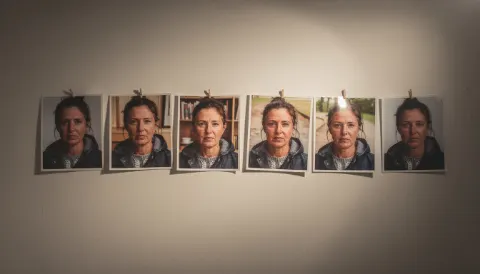
A wide lens close to a face feels very different from a long lens far away, even at the same shot size.
In Camera, try each lens and size on the same shot and compare the feel before you write the prompt.
Free, in your browser, nothing to install.
Questions
Do video tools understand lens numbers like 85mm?
Many respond to them, but results vary by tool. Name the lens and also describe the effect, such as soft background or compressed distance.
What lens should I use for a close-up?
Many people use 50mm to 85mm. A wider lens close to the face distorts it, which can be a choice for tension.
Is shot size the same as lens?
No. Size is how much of the person fills the frame. Lens changes the shape of space. You can get a close-up with almost any lens by moving the camera.